Most Women in Chandrasekharpur Know They Should See a Gynecologist More Often. Here Is Why They Do Not — and Why That Needs to Change.
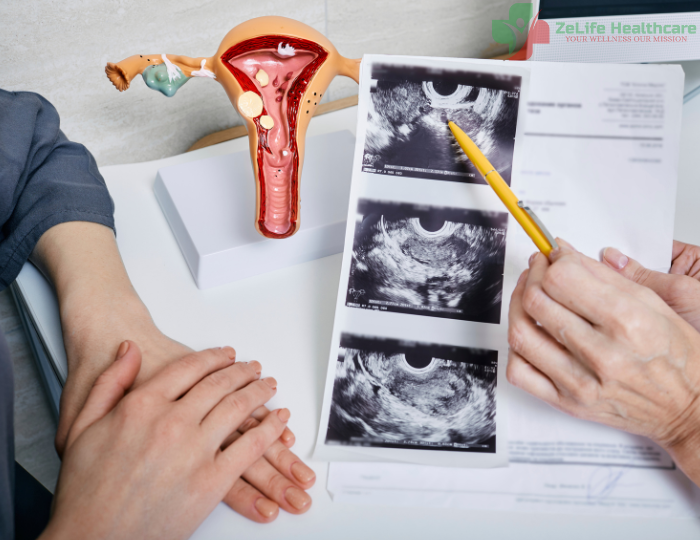
Ask any woman between the ages of twenty-five and fifty living in Chandrasekharpur, Patia, KIIT, or Niladri Vihar when she last visited a gynecologist, and the answer falls into one of three categories. She went during her last pregnancy. She went when a symptom became impossible to ignore. Or she cannot remember.
This is not a pattern unique to Bhubaneswar. It plays out across urban India, among educated, professionally active women who manage their careers, their households, and their children's health with considerable attention and competence — and who nonetheless deprioritise their own reproductive and hormonal health in ways they would never deprioritise anything else of comparable importance. The reasons are familiar: time pressure, the assumption that gynecological care is necessary only when something is clearly wrong, the discomfort of bringing up symptoms that feel embarrassing or intimate, and in many cases a simple absence of a trusted, accessible gynecologist near home who can be seen without a half-day expedition to a major hospital.
The consequence of this pattern is that conditions that are eminently manageable when caught early — PCOS that has been present for years without a formal diagnosis, endometriosis that has been accepted as severe period pain because no one suggested it might be something else, irregular bleeding that was attributed to stress rather than investigated, fertility concerns that were not raised with a specialist until after years of trying — arrive at the consultation room more advanced, more emotionally loaded, and more difficult to manage than they needed to be.
The PCOS conversation that happens too late. Polycystic Ovary Syndrome is one of the most prevalent hormonal conditions affecting women of reproductive age in India, and it is one of the most under-diagnosed in its early stages. This is partly because its early symptoms are so easily explained away individually. Irregular periods — stress, diet change, travel. Weight gain that does not respond normally to dietary adjustment — slow metabolism, hormones, age. Skin that becomes acne-prone in the mid-twenties after being clear through adolescence — stress, change in skin type. Facial hair that increases slightly — genetics, hormones. Each of these symptoms, taken alone, can be rationalised. Together, they form a pattern that a gynecologist will recognise immediately and that warrants hormonal assessment, an ultrasound, and a management plan.
PCOS matters not just as a reproductive health concern but as a long-term metabolic one. Insulin resistance — which is associated with PCOS in a significant proportion of affected women — increases the risk of type 2 diabetes and cardiovascular disease over time if it is not identified and managed. Women with untreated PCOS who are not planning a pregnancy in the near term often assume there is nothing to be done — that management only becomes relevant when conception is the goal. This assumption is incorrect and carries real long-term health consequences.
Menstrual disorders — the pain that should not simply be endured. A substantial proportion of women in India, across all ages and educational levels, have internalised the idea that painful, heavy, or irregular periods are simply a feature of being a woman — something to be managed with painkillers and a hot water bottle rather than investigated. This cultural normalisation of menstrual suffering is one of the most consequential women's health beliefs in the country.
Painful periods that require strong analgesics to function, that interfere with work or daily activities, or that are accompanied by pain during intercourse or pain in the lower back and pelvis outside the menstrual period may indicate endometriosis — a condition in which tissue similar to the uterine lining grows outside the uterus, causing progressive inflammation and scarring. Endometriosis is significantly under-diagnosed in India, with average diagnostic delays of several years from the onset of symptoms. The delay is primarily driven by the social normalisation of menstrual pain, which means women do not bring the symptom to a doctor, and when they do, it is sometimes dismissed as normal without investigation. A gynecologist who hears this history and takes it seriously can initiate the evaluation that leads to diagnosis and appropriate management — which for endometriosis includes both symptom management and, where relevant, fertility-preserving treatment.
Heavy menstrual bleeding — defined clinically as blood loss that requires changing protection more than hourly for several hours, that includes passage of large clots, or that is accompanied by symptoms of anaemia such as fatigue, breathlessness, and pallor — is another symptom that is both common and commonly under-reported. Its causes range from fibroids and polyps to hormonal imbalance to, less commonly, coagulation disorders or uterine pathology. Treatment options are multiple and increasingly less invasive than the hysterectomy that was historically the default — but accessing those options requires a consultation that establishes the diagnosis first.
Pregnancy care — why antenatal follow-up is not optional. North Bhubaneswar has a high proportion of couples in their late twenties and thirties who are in the early stages of their reproductive journey — first pregnancies, second pregnancies, pregnancy planning. For this group, the quality and consistency of antenatal care has direct implications for both maternal and fetal outcomes. Regular antenatal visits allow blood pressure monitoring that can detect early preeclampsia before it becomes dangerous. They allow gestational diabetes to be identified through timely screening and managed before it affects fetal growth. They allow fetal growth to be tracked, anomaly screening to be offered at the appropriate gestational ages, and any complications — from placenta previa to intrauterine growth restriction — to be identified and managed proactively.
Women who attend antenatal care consistently and with a gynecologist who knows their history have demonstrably better pregnancy outcomes than those whose antenatal care is fragmented, delayed, or limited to emergency attendances when something goes wrong. The friction of accessing antenatal care — finding a gynecologist, getting an appointment, reaching a facility that is not inconveniently located — directly affects the consistency of follow-up. This is why the proximity of specialist obstetric care to where women actually live matters as a practical health outcome question, not just a convenience one.
Infertility — why early evaluation changes what is possible. Couples who are experiencing difficulty conceiving often wait far longer than is medically advisable before seeking specialist evaluation. The reasons are understandable — the emotional vulnerability of the topic, the stigma that still attaches to infertility discussions in many Indian families, and the hope that the next month will be different. The medical reality is that fertility declines with age in a way that is not linear — it is relatively gradual through the late twenties and early thirties, and then the decline accelerates. For women over thirty-five, the guidelines recommend seeking evaluation after six months rather than one year of trying, precisely because the window for certain interventions narrows meaningfully with age.
An initial infertility evaluation by a gynecologist does not commit anyone to any particular treatment. It establishes baseline information — ovulation assessment, hormonal profile, uterine anatomy, tubal patency if indicated, and a basic male factor assessment — that tells both the couple and the clinician what is actually happening and what options are realistic. That information is enormously valuable regardless of what it shows, because it replaces uncertainty and silent worry with a clear clinical picture.
ZeLife Healthcare in Damana, Chandrasekharpur provides comprehensive gynecology and obstetrics services with two experienced specialists — Dr. Kumudini Chaulia and Dr. Monalisa Pal — covering the full range of women's health needs from adolescence through menopause. Consultations are available from 7 AM to 10 PM daily, making it genuinely possible for working women in Chandrasekharpur, Patia, KIIT, Niladri Vihar, and surrounding areas to attend an appointment before or after work without sacrificing a full professional day. In-house pathology and ultrasound coordination mean that initial investigations can be completed in a single facility rather than across multiple locations.
For women in north Bhubaneswar who have been postponing a gynecology consultation because the timing has never been quite right, because the symptom has not yet crossed the threshold that feels urgent enough, or because no trusted, conveniently accessible specialist has been identified — that consultation is worth prioritising before the next reason to defer it arrives.
👉 Book a consultation or read more here: Gynecologist in Chandrasekharpur, Bhubaneswar — ZeLife Healthcare


Comments
Post a Comment